
Michalis Koumarianos on theatre, trust and Their Wonderful World
Ask Michalis Koumarianos which moment in a theatre workshop means more to him than a round of applause, and he answers without hesitation. It’s the hug at the end of class.
At Studio Ekfrasi in Corfu, a class might begin with everyone standing still. There’s no line to remember and, for a moment, no movement at all. Koumarianos asks his students to pay attention to what’s already happening in their bodies. And if a child tells him, quite plainly, that they’re bored, he takes that seriously too.
An actor, teacher and father, Koumarianos has spent years thinking about what it means to listen in a room where people communicate in different ways. His play Their Wonderful World began with a question from a mother going through a difficult time with her child. “Michalis, what should I do?” she asked him. The play’s central character, Petros, asks a question of his own. Who decided what’s normal, anyway?
Melina spoke with Koumarianos about learning to trust the body, giving children room to surprise themselves, and what he hopes people will talk about after the curtain falls.
MELINA SIOUGA: Is there a moment in your work with autistic children that changed how you think about your role in theatre?
MICHALIS KOUMARIANOS: Every time I spend time with neurodivergent children, I learn something new. Getting to know these children has changed how I understand myself, first as a person and as a dad. That, in turn, changes how I approach each role in the theatre.
Being with them brings up all sorts of feelings in me, and that’s where the richness is. There can be exhaustion and shouting, and sometimes a child might hit out. I try to understand what they’re finding hard to communicate. They can feel trapped when they can’t express what they want.
Then there’s the moment when a child realises you’re there, that you understand them and you’re listening. Something magical happens. It’s changed how I see things well beyond the theatre.
MS: Theatre often gives priority to words. What room do you make for movement, silence, repetition or other ways of communicating?
MK: At Studio Ekfrasi, we put a lot of emphasis on movement. Or, more precisely, on the energy an actor has within them. We learn to trust our bodies and let them show us the way. The body is cleverer than we are. It wants to move and we keep saying, “Not now. That’s not for you. You’re too old for that sort of thing.” We hold it back, and eventually it lets us know in all sorts of ways.
Often we start a class with our bodies still, in silence. Even then, there’s energy there. We find it, become aware of it, and when we let it go, wonderful things can happen.
MS: How do you balance the stability a child might need with the surprise and unpredictability of improvisation?
MK: Children need to trust you. You have to show them that you believe in them and take what they say and do seriously. That’s where mutual respect comes from. You can genuinely communicate, and the children feel safe.
Once you have that trust, an unexpected moment can be a lovely thing, if it comes at the right time and in the right way. A child can discover things about themselves through improvisation that they didn’t know were there. It’s like digging somewhere and suddenly finding treasure. And in this case, the treasure is theirs.
MS: How might a child tell you they want to change something, stop, or simply watch? How does that affect the group?
MK: Very easily. Sometimes they tell you straight out, “I’m bored.” Other children will show you. They might lose interest, stop joining in or simply say, “I’m tired.” Maybe they’ve lost interest in the exercise, maybe they really are tired, or maybe something has happened in the group that’s made it difficult for them to take part.
Whatever the reason, you have to listen and try to understand. Sometimes it interrupts the flow of the class. You have to be ready to adapt and find a way for the group to keep going.
MS: What small moment in a workshop means more to you than the applause at the end of a performance?
MK: Without a doubt, the hug at the end of each class.
MS: What part of this work stays invisible to people who only see the result? What does it take to build trust over time?
MK: A lot of what happens in the studio goes on beneath the surface. You won’t see the results in the first week. What matters to me is helping people grow into themselves, believe in what they can do and feel ready to take on whatever life brings. I want them to have the confidence to try things, to take initiative and to respect the person next to them. In a group, that also means giving someone else room to take their turn.
For that trust to last, you have to live by those values consistently.
MS: How did Their Wonderful World begin? Was there a question that made you feel this story needed to be told on stage?
MK: The idea came when I first got to know the children and their families. Spending time with parents helped me understand the difficulties they face, the wonderful moments they experience and the times when they can feel there’s no way forward.
A few years ago, a mother was going through a really difficult time with her child. In a moment of desperation, she asked me, “Michalis, what should I do?” That’s where it all began.
MS: Did you ever change a creative choice because you realised it could reinforce a stereotype about autism?
MK: I design exercises differently for each child. There have been times when I’ve changed a creative choice because I realised it could reinforce a stereotype about autism, even unintentionally.
I’ve learnt to make room for the ways each child expresses themselves, whether that’s through their own way of moving, communicating without speech or communicating in another way. Those are part of their individual expression.
MS: How have you approached the experience of autistic audience members, who may have different sensory needs?
MK: I want the play to introduce more people to neurodiversity. It’s a confronting piece with intense scenes, so my initial concern was that it could be difficult for an autistic child to watch.
MS: The production is intended for ages 16 and over. When you mention those intense scenes, are you thinking specifically about children or also about autistic adults? Can audiences expect information about potentially intense scenes, lighting or sound?
MK: It depends on the individual. An autistic audience member may understand and identify with Petros. The play explores different ways of thinking and brings together scenes from everyday life with more poetic passages.
It can bring up a lot of feelings. A scene, a light or a sound that one person is comfortable with may unsettle someone else.
MS: When the curtain falls, what conversation would you like people to have? What would you like to see change in everyday life?
MK: I’d like people to talk about what we call normal. It’s the question Petros asks in the play. “Who decided what’s normal, anyway?”
I’d like to see more respect and understanding for these children and their parents. I’d like people to stop staring at them. I want these families to have support from the state and for their everyday lives to be treated with more humanity.
Studio Ekfrasi
Michalis Koumarianos has worked as an actor since 2010 across theatre, television, film and voice-over, and has also directed. He has performed in Greece and abroad and has lived and worked in Corfu since 2020. He’s also dad to Nikolas and Aphrodite.
He founded Studio Ekfrasi in Corfu as a space for children, teenagers and adults to explore theatre through play, movement and improvisation. The studio offers dedicated theatre classes for autistic children, children with Down syndrome and children with other disabilities. It also prepares students for drama school auditions. Koumarianos is currently preparing his first short film. Studio
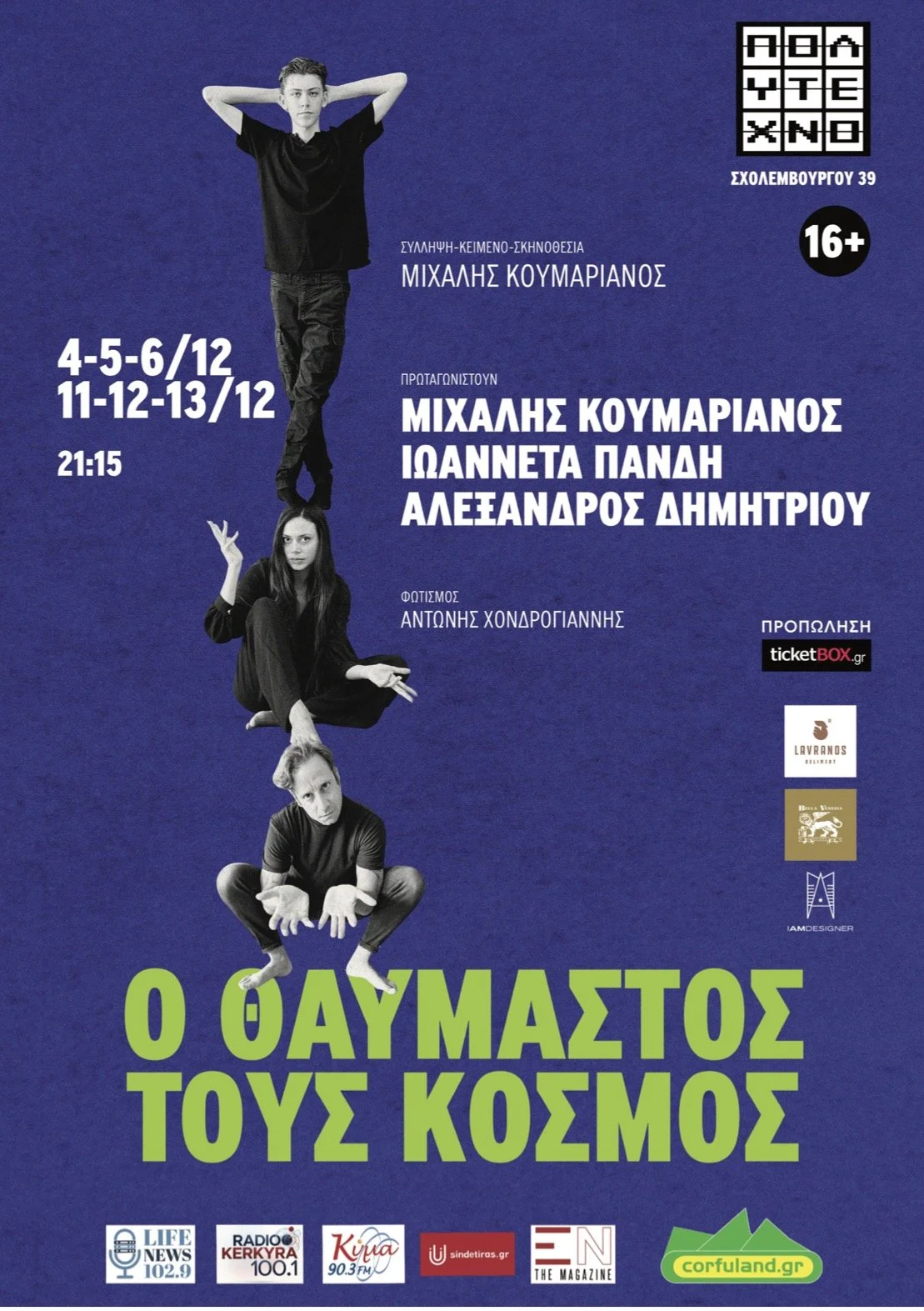
Their Wonderful World · Ο Θαυμαστός τους Κόσμος
4–6 and 11–13 December 2026
Polytechno (Πολύτεχνο), 39 Scholemvourgou Street, Corfu 491 00, Greece | Σχολεμβούργου 39, Κέρκυρα 491 00
The venue is near the entrance to the New Fortress.
Doors open at 9 pm, with performances starting at 9.15 pm. The play runs for 75 minutes without an interval and is listed for ages 16 and over. General admission is €15.
Book tickets via ticketBOX | Get directions on Google Maps

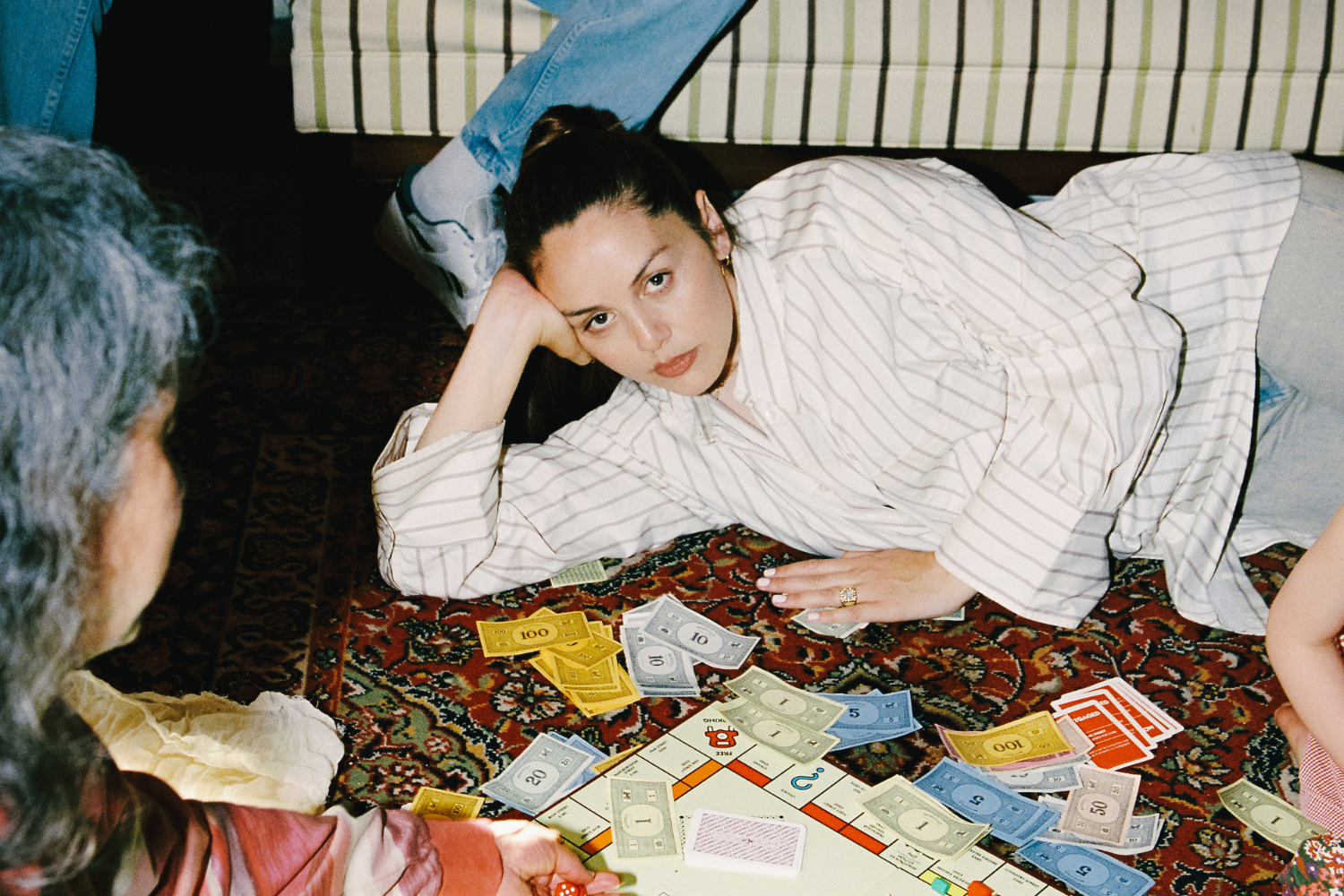
At Studio Ekfrasi in Corfu, a theatre class can begin in silence. Ahead of Their Wonderful World, actor and teacher Michalis Koumarianos talks to Melina about trust, listening and the question his play asks out loud: who decided what’s normal?