
You can be a film or television critic if you love or hate the story enough. I say this to affirm by own hubris insofar that I can do it as an infrequent binge-watcher. I think that it’s easy if you come up with a couple of one-liner gems. Hopefully I string together a few.
Matthew Weiner’s Mad Men is probably my favourite show. I’ve been rewatching it on HBO Max; if you’ve never seen it, please do, I need more people to talk about it with (hence partly why this article exists).
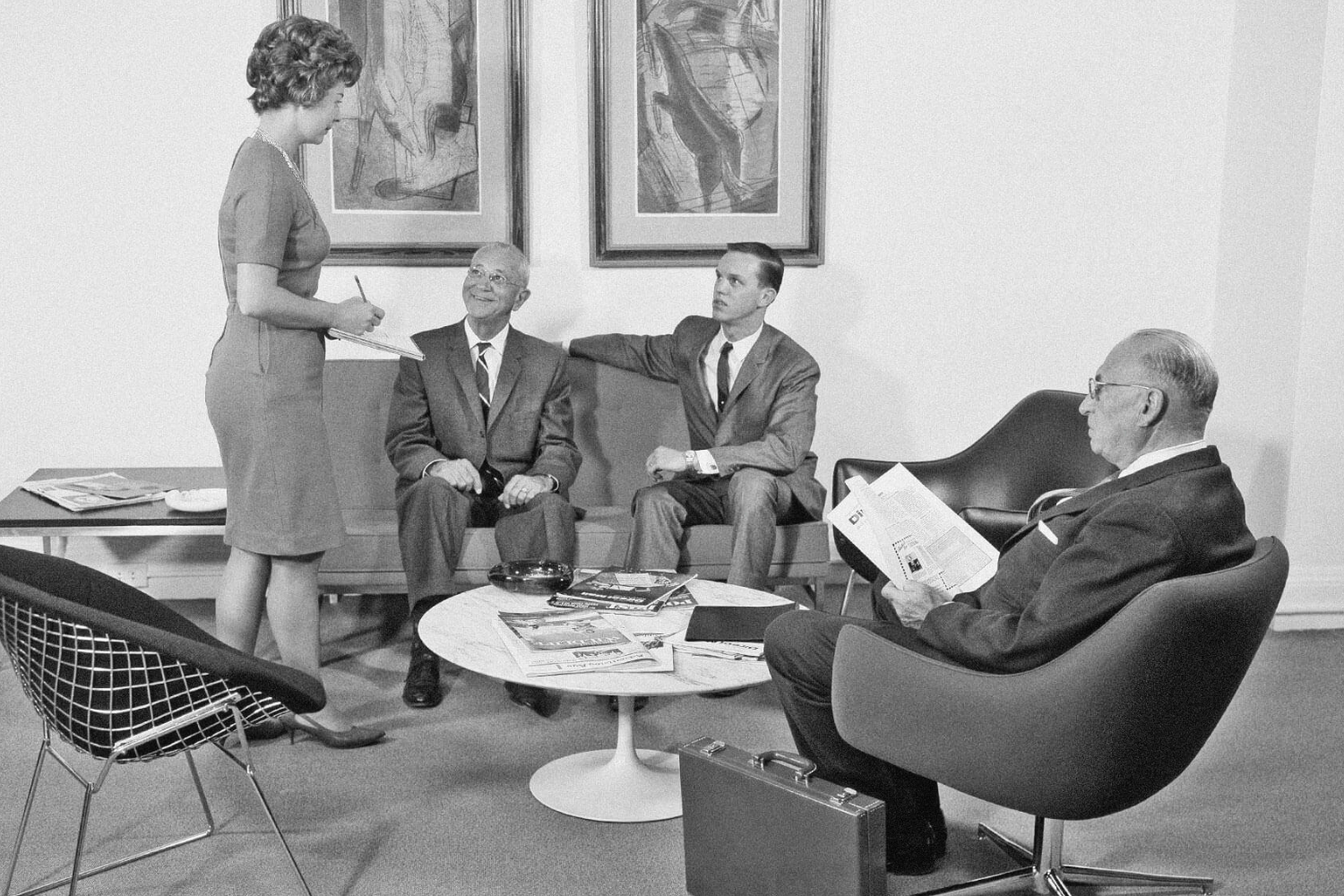
It’s a 2008 period drama set in 1960’s New York, following fictional ad men of Madison Avenue, (Mad Men, the coolest nickname). Based on the executives at real advertising monoliths of the time. They drink, connive, chain-smoke with pensive and intense expressions on their faces, and embody the jarring disparity of privilege between straight, white, wealthy, educated men, and everyone else.
I watched it start to end when I was 13. I was obsessed with the style, the accents, the advertising strategies, the incredible attention to detail, it was brilliantly immersive. Even more so, I was horrified by the uncompromising portrayal of the treatment of women and marginalised groups. It sits on the backdrop of placing the brilliant Don Draper, the protagonist, as a tortured poet, a man out of his time, irresponsible for his actions because he ostensibly sits above it all.
We’re all aware of the Red Pill phenomenon, and the not-so-ironic worship of fictional characters – Patrick Bateman of American Psycho, Tommy Shelby of Peaky Blinders, Tyler Durden of Fight Club – that portray exacerbated representations of masculinity, with the intention to criticise. Some people, particularly young men who have the media literacy of 4-year olds, see them as aspirational. They internalise corrosive, toxic and misogynistic traits of these characters missing the point completely.
It is shocking to me that Don Draper (Jon Hamm) the show’s protagonist, has not been surreptitiously canonised in the metaphorical Red Pill Hall of Heroes in the same way, as he fits this description perfectly. He’s tall, rich, and handsome (traits that he seems not to notice about himself); he’s self-made, perfectly charming and even chivalrous; he’s a certifiable advertising genius, complete with the bow of also being a war hero with a tormented past. Simultaneously, he treats his wife awfully, cheats constantly, drinks and smokes all hours of the day, and has moments of deep self-reflection, over none of these issues. He represents the highest achievements of success in a man’s eyes, and audiences are inclined to empathise with this obvious antihero.
As a kid, I worshipped him, or at least his image - the cool hair, the deep voice; his confidence and command; always having the right thing to say. Looking back, I’m so glad that it didn’t send me down an incel pipeline, but I also watched long enough to not miss the point. The more you see, the more you pity the man who, on paper, has everything.
I think the obvious flaws of the hero are portrayed in a way that, if you really come away from the show seeing those flaws as virtuous, you have to be some kind of stupid – you see sleazy, slimy suits constantly harassing women, saying disgusting things, and overall just being miserable, while they lick their bosses’ boots get in constant dick-measuring contests with their peers. It’s a comprehensive and jarring presentation of patriarchy, that seriously holds up.
I think Don, thankfully, can’t qualify for Red Pill canonisation, because you’re constantly seeing his sins. Doing whatever he wants, whenever he wants, is constantly juxtaposed with other characters (portrayed explicitly to be disgusting and pathetic) doing exactly the same thing. You’d have to be blind to separate the superficial ‘virtues’, the social media clips of his inspiring, powerful speeches and ice-cold one-liners, from the rest of him.
Roger Sterling, (John Slattery), a supporting character and a sort of ghost of Christmas Future and the devil on Don’s shoulder, has constant affairs and drinks and smokes himself close to death, has no inhibitions and is yet deeply unhappy. He’s the scoundrel. Pete Campbell (Vincent Kartheiser) noted as having a distinctively punchable face, does virtually the same thing - drinks, smokes, cheats, has no self-awareness, remorse or patience. He’s childish and selfish, often cruel; a perfect heel to root against.
Those 3 characters, in my opinion, are virtually the same person. You have a successful, wealthy white man almost completely unappreciative of his privilege, the key differences being how they express their entitlement. Campbell is bitter and envious, Sterling is, in a way, content and accepting of the status quo, and Don feels merely observant, stoic. The three are chained to their vices and make no efforts to change. You see three Dons, because they all think they are ‘the Don’.
The characters of Peggy Olsen (Elizabeth Moss), Betty Draper (January Jones), and Joan Holloway (Christina Hendricks) are hardworking, aspirational women that time and again are repressed, overlooked and underestimated by virtue of their gender. As a boy and later as a young man they were rebels to me, defying the confines of their expected roles, which to my naive 13-yr old brain seemed like hell. Betty creates agency and independence for herself, defying the confines of the traditional housewife role. Joan exploits underestimations of her acumen, and Peggy, who fights tooth and nail to achieve success in the quintessential Man’s World and make her voice heard. This representation of women was essential to neutralising the basic, two-dimensional portrayals of Draper, Sterling and Campbell, who fiercely maintain the status quo to assure themselves that the world is the problem, they’re just making the best of it.
Rewatching it in parts over the last few weeks, I’m struck by how relevant it still is – mark of a good period drama. While not revolutionary, it’s unflinching in its delivery. My question is, did watching Mad Men, instead of something like HBO’s Entourage, a show of the same era infamously criticised for romanticising aspects of toxic masculinity, set me on a better path, or did I get lucky?
Don is far from a good role model. Honourable, patient, caring, sure, but usually with women he objectifies and stays distant from. He is devoid of attachment, and in this way can get away with picking and choosing what he cares about at a given moment. He lies, philanders, is blunt, rude, and in a lot of ways, obsessed with his reputation. What strikes me as a turning point for interpreting his character, is how one might view his efforts to make something of himself. He runs away from his past to create and maintain a steadfast facade. Is this not what it means to bury yourself and chase what others expect of you? Success, power, pleasure? Understanding Don is to see that and worship him for it, or pity him.
Would I show kids of my own Mad Men one day? Absolutely. Say what you will, but it’s quality TV. Artfully-done, great acting, great story, it holds up – what more could you want? Probably not at age 13 though, hopefully I would have raised them well-enough to pick up a book or something.
Not to say that Mad Men raised me, I’m glad it didn’t but at that impressionable age, when you have no idea who you are and you’re unconsciously seeking role models everywhere you look, maybe it could’ve been a lot worse. I’m not perfect, but I’d prefer Don Draper to Andrew Tate.
Culture Editor Joseph’s curated Over The Underground follow-up. Detailing the experience at a local gig, exploring what the Sydney music scene looks, feels and sounds like right now.