
Cult. Circuit #007: Days Of Lazy Thinking.
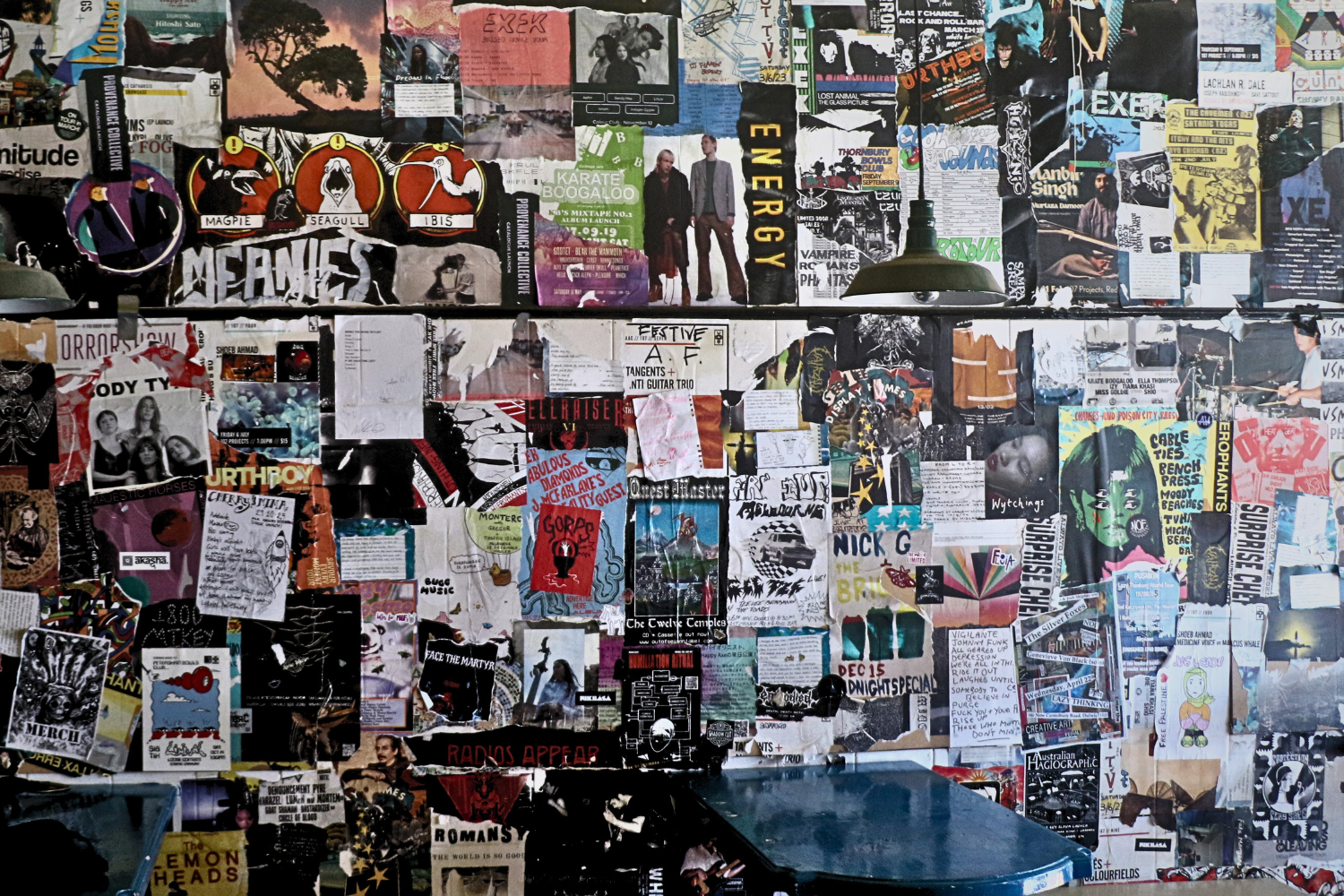
If you’re tapped into Sydney’s live music scene or Inner West community, you’ve heard of Lazy Thinking. Calling it a music venue or gig stage sells it short. It was a not-for-profit space for local gigs, a record store, a place to get a bite, a beer, and a stronghold of the Sydney underground community since 2023. They closed their doors on August 29th, the latest of several independent music venues to shut down or announce imminent closure this year: Mary’s Underground (formerly The Basement), Zen Studios, Divine Playhouse, and MoshPit Bar.
Musician, writer, record producer and owner of Lazy Thinking, Jim Flanagan, is looking to reopen. I had the opportunity to interview him on why the doors closed, the circumstances affecting so many small businesses, and, this is the most groundbreaking thing, new models of funding, potentially catalysing a change in the dynamics between musicians, venues and audiences.
This is an epic poem. Everything in Jim’s own words I really wanted to cut the transcript from our conversation shorter (I made small edits here and there to keep it flowing, like when he would say ‘really’ more than three times in a row) but I just couldn’t. There’s so much of Jim’s DNA in the ways he strings his words together. He’s this fierce, unshakeable engine, piloted by a brain that goes a mile a minute. Endlessly voluble, I want this to be more than a story of the moment. This is Jim’s legacy, and after being pulled the Lazy Thinking event horizon, I want to be part of his chronicle.
Jim’s optimism is viral. It’s hard not to start seeing things his way considering he just can’t seem to stop talking (something I really relate to) but if you earnestly said to him “don’t worry mate you’ll be ok” he’d probably look at you like you were joking – he doesn’t need to be comforted like that, he’s already decided that he’s going to be fine.
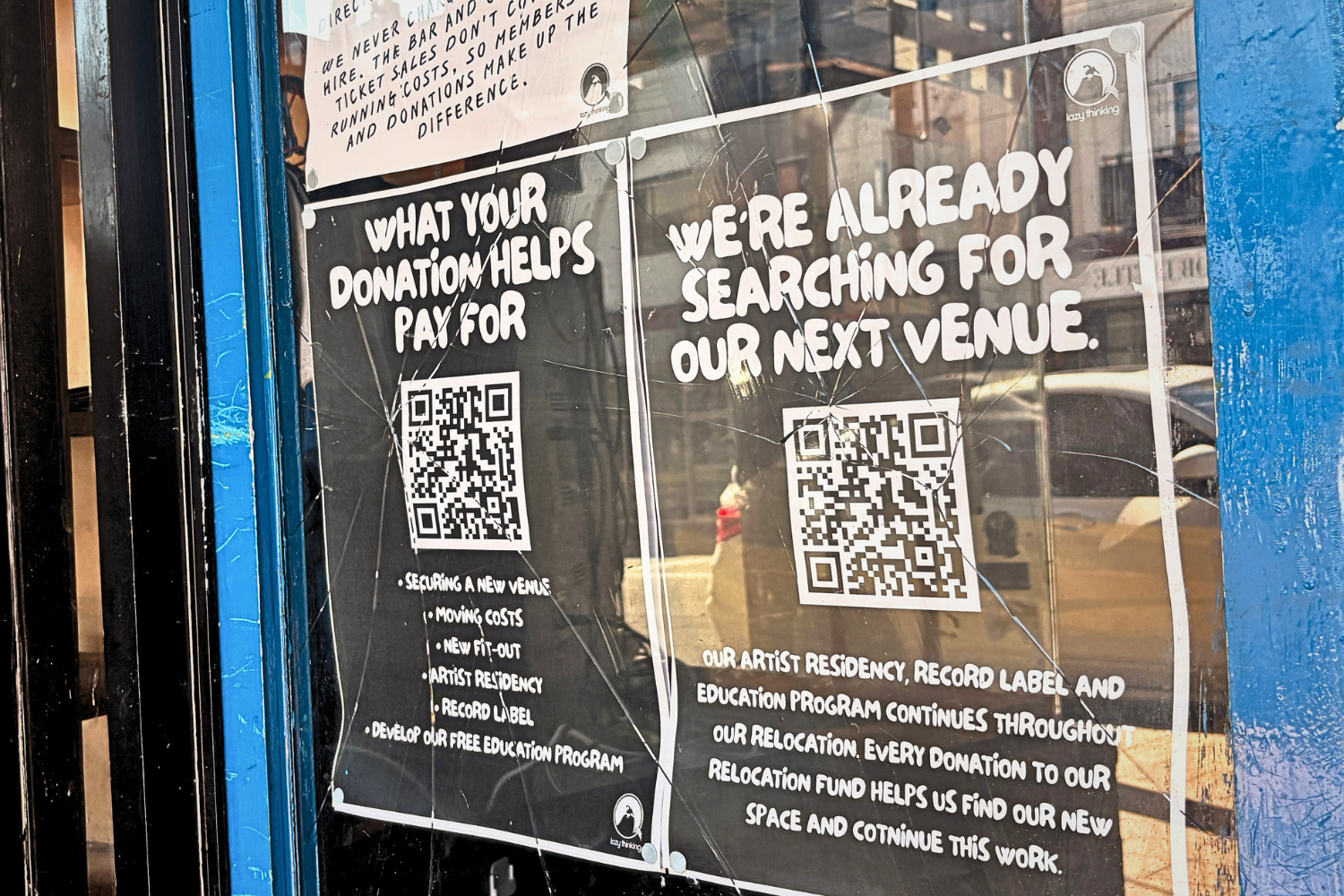
I arrived at the door with a cloud over my head – for myself and vicariously for him and the team, but it evaporated within 5 minutes meeting him. His jubilance, confidence and openness made me think he’d had a premonition of the future and knew that he’d be ok. The way he spoke of the venue was like an old castle in his family name for generations, not a converted butcher shop that had been playing gigs for three years. It’s quite amazing what passion can make of a place. I can’t wait for the next days of Lazy Thinking; when they come, I’ll be there.
I see it as an underdog story, in an industry of small businesses owners and independent artists, forming the foundation of an accessible and community-based art scene. What could be more important to cover for a culture column???
It started first as an independent record label, Lazy Thinking Records, co-founded and owned by Jim. Involved in the music scene for decades, Jim managed the converted-butter shop that headquartered the label, and hosted over 850 local gigs in their three short years. It was run totally Independently, with a small team dedicated to Lazy’s vision – equitable pay and ethical visibility for local musicians.
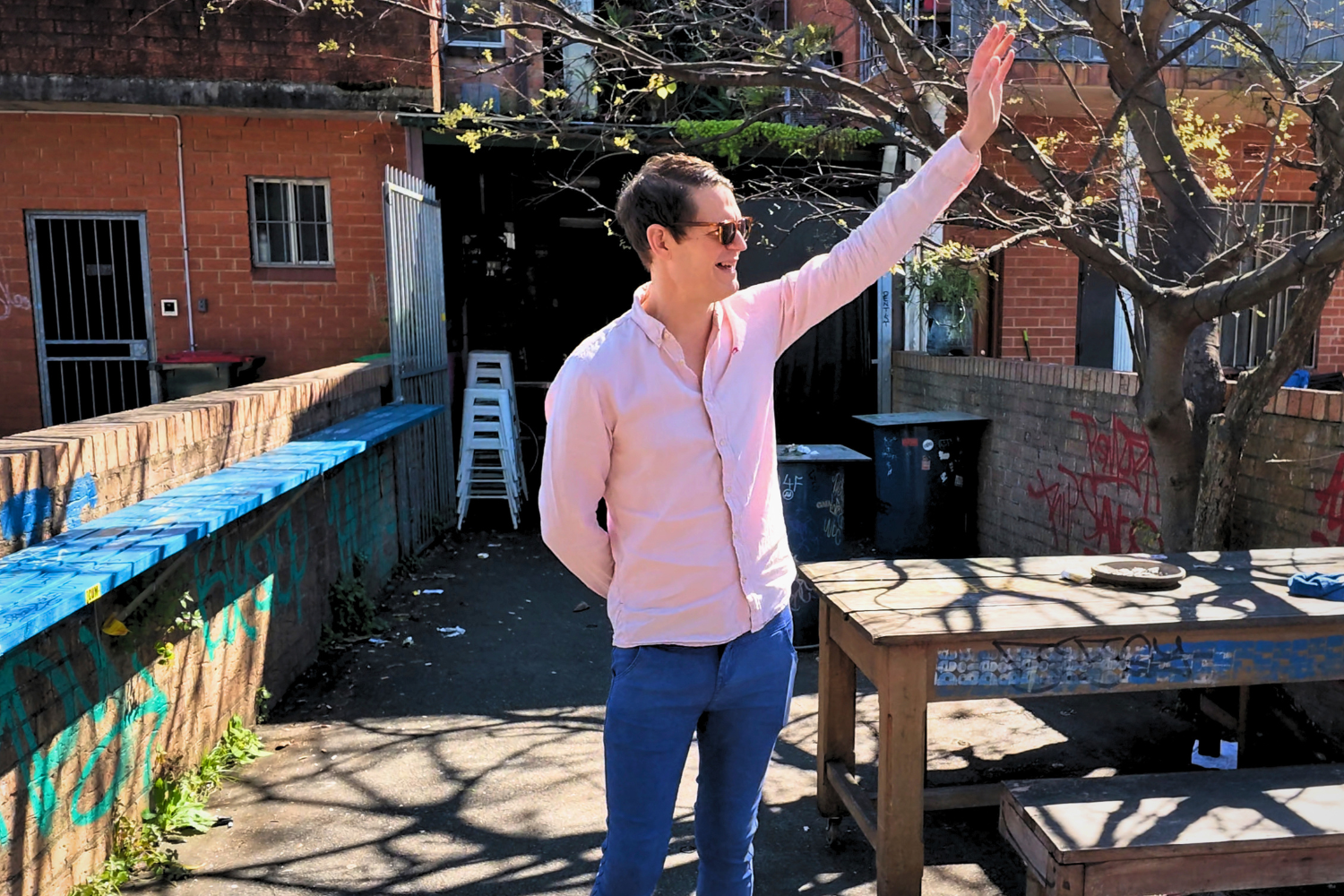
Only a few days before the final show, I sat down with Jim in the sunlit stage hours before it would fill with musos.
We chatted for over an hour. He speaks in this expansive, rapid way like a barrister, covering every loose end he might’ve left. It’s like he already knows what you’re going to ask, and strings answers together in an improvisatory way with a confident clarity.
Read it all.
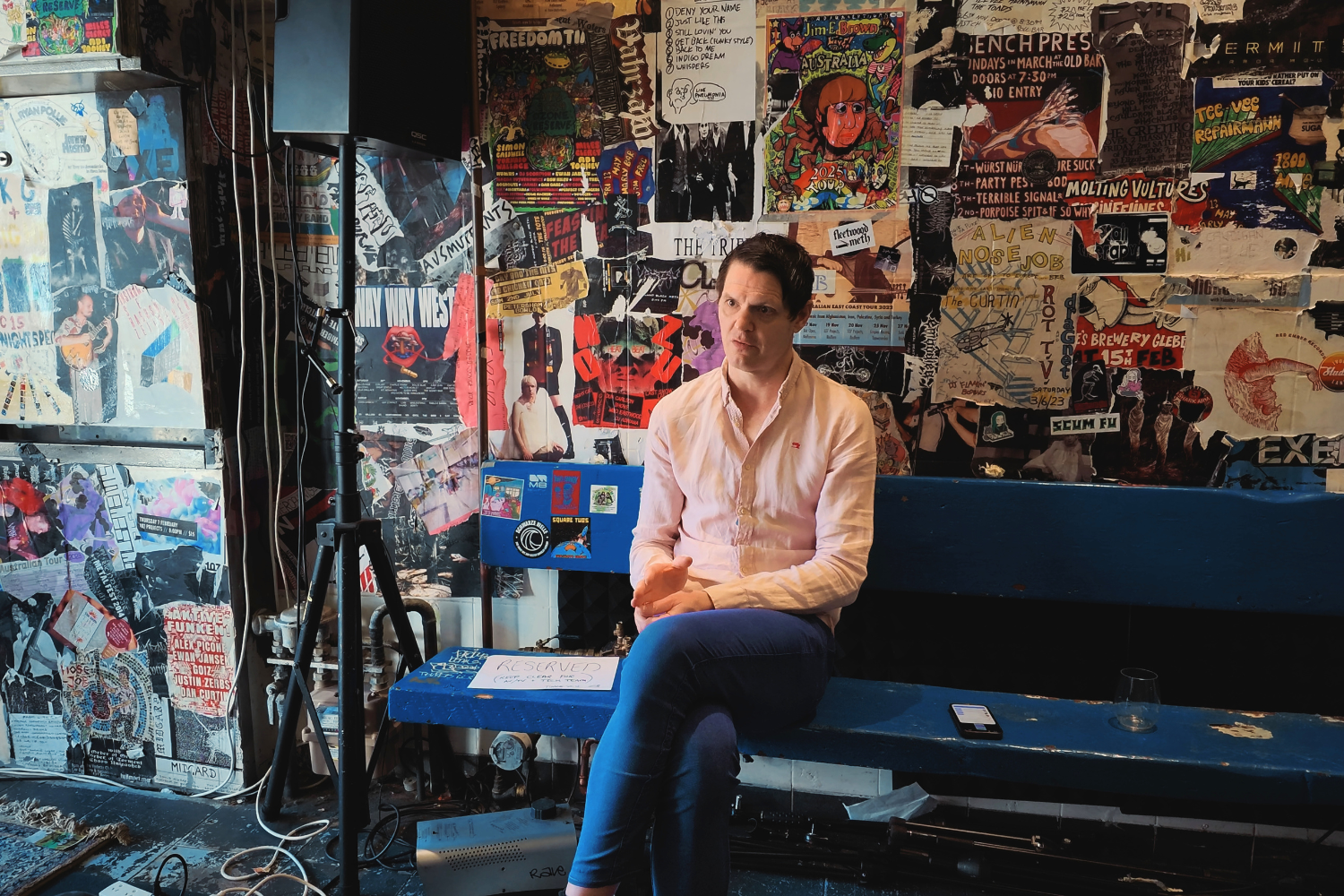
The Interview.
Joseph Agius: Tell me what your role is here.
Jim Flanagan: Oh wow, haha man, what do I do here?
I started this crazy organisation, Lazy Thinking; it sort of evolved quickly. I previously ran a hospitality business; I'd run a small record label with a few other people for about five years – Lazy Thinking Records actually precedes Lazy Thinking – and I wanted to bring my stuff together basically.
I think one of the starting points for Lazy Thinking is that it wasn't a hospitality business… it was a really safe place that independent artists, and in particular new and emerging artists, could go and play without any financial repercussions. We provide staff; there are never any overheads or rental fees, so we've always tried to provide a place that prioritises access for musicians.
I have a really great team, so it's absolutely not just me. I manage all that strategic stuff, the development of the artist support streams of work - I hate the word stream - that we've brought in over the last few years, and I manage all the programming as well. Yeah, it's a lot, haha.
What comes under programming and support?
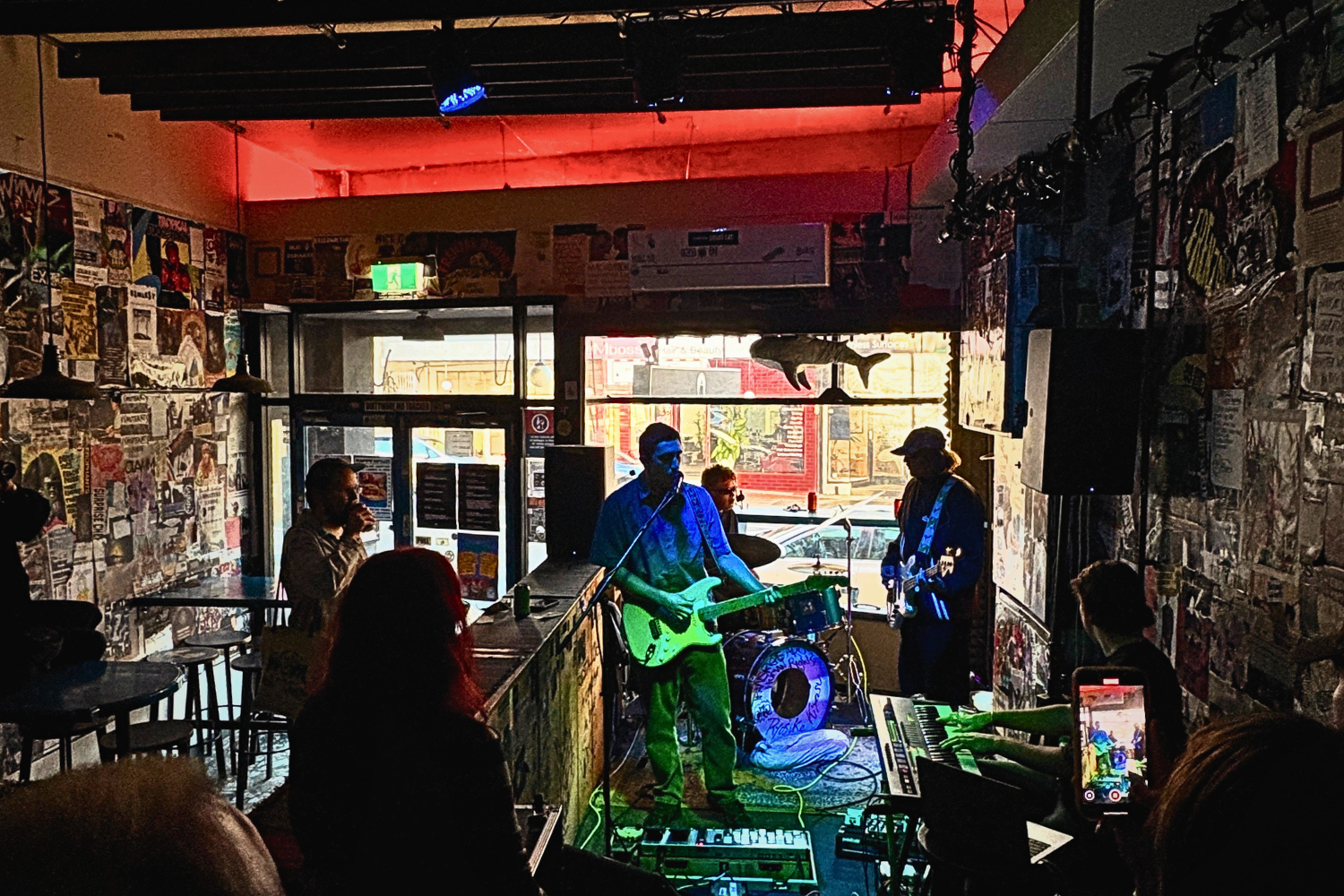
We've always tried to put on shows every night of the week here; we do at least six on average, sometimes 8 or nine, haha. There are a huge number of shows to program where there's demand. Some of my team, especially the venue manager here, has done a great job of supporting me on that.
Whenever you send an email to Bookings@LazyThinking.com, it comes to me; there's a lot of artist engagement. Every day, I probably talk to or communicate with five to ten artists, sending them documentation on how we work.
When you're a new and emerging artist, you don't necessarily know anything about putting on a show, right? It's like “What time do I get there?” “Do I need to bring my own gear?” “Do I need to bring my own drum kit?” “Do I need to do a flyer?” “What does the flyer need to have on it?” The only way that you can learn is by doing it. We've always tried to make those early conversations straightforward.
I always try in those conversations and those emails to just put them at ease and say, “Hey, it's cool. This is Lazy Thinking; we're here to help you. We know you haven't played many shows, or sometimes any shows before that's fine. Have a read of this; you can ask me any questions that you want.” We try and make sure that we're having those conversations in the right way, and we're looking after them in the best possible way that you can as a venue.
I really love how connected you are, even if emerging artists at a first show don't know what a sound check is. Why do you do it? Where does the passion come from?
I was an artist for a long time; I know what it's like, I know how hard it is, and again, I think one of the starting points of lazy thinking is a recognition that this is the hardest it has ever been for being an independent artist; for being an… artist of any description, but especially an independent artist. It's… it is the hardest it has ever been unambiguously.
Streaming has comprehensively removed the main income sources for artists over the past 30 years, touring is really expensive, there are increasingly less venues to play… the venues themselves are struggling so much for a whole range of macro and micro reasons. One of the starting points of Lazy Thinking was recognising there was a huge hole in the industry, and there just needed to be more opportunities for performance access for new and emerging artists.
We started doing shows once a week, and then I think within about two weeks it was twice a week, then within six months, we were doing five shows a week, and within nine months we were doing shows every day of the week because of the demand.
And we can talk about the economics of it; we realised very quickly that it wouldn't work financially, ever, as a business. We moved away from that and looked at funding it differently.
Why is Lazy Thinking not for profit?
So we had a moment of clarity really early on, like within, I would say, a month of first starting the shows; it was clear it was never gonna work financially, right? And we were looking at what we wanted to do… we recognised where our passion lay wasn't in running a successful business; our passion was in providing access and opportunity to new and emerging artists.
Lazy Thinking has only ever survived financially through very limited own takings – which is never enough to cover our costs – augmented by a small circle of donors’ constant fundraising that I manage, and the occasional government grant, and it's only through a combination of those things that we've been able to keep our nose above water.
We weren't charging any upfront fees, which means that we carry all the economic cost. I think that's one of the reasons that lazy thinking has produced a lot of loyalty and support in the music and non-music community, because it's recognition there that clearly it's never gonna work as a business, right, and that our motives are charitable. Because of that, it has allowed us to successfully raise money, capture the attention of philanthropists who have helped us out for the past few years, and successfully apply for a limited amount of funding from the government.
Lazy thinking has launched a new funding model; tell me about that.
Another of the realisations that we made really early on, and this has absolutely gained momentum over the past couple of years, was that people's drinking habits have just changed massively, right? There's always been this sort of ancient transaction, a handshake agreement between music venues and small music organisations - but in particular venues – where you charge door fees for shows, you charge tickets; the majority of ticket sales go to the artist, that's how the artist are paid. Although some venues take a lot more than others and everyone has their own model, that's fine, but traditionally most of the door sales go to the artist, and the venue sells grog basically.
Drinking habits have changed materially, especially over the past 10 to 20 years, and that is no longer a viable way of in particular small- and medium-sized venues operating. The numbers just don't work.
People don't drink enough and I think that's a really really good thing. I'm not in any way anti-alcohol, but it's just recognition that the live music industry has traditionally survived and proliferated off a total reliance on the alcohol industry… People drink a hell of a lot less than they used to for all sorts of complex reasons. Also, young people just have a hell of a lot less spending power than previous young generations did.
The live music industry is being forced, very, very painfully, to decouple themselves from their reliance on the on the alcohol industry. I think that's a really good thing; it's a very painful transition, but it is forcing an entire industry to look at alternative funding models. We introduced a new model about two months ago: a subscription-based model with two membership tiers.
There is an existing model that's been talked about recently in the sporting world, almost the default model for how that runs, right? You buy a yearly subscription for an organisation and a community that you are part of that you want to support, and rather than, again, rely on alcohol sales, you look to the community and say, “Hey, we are an organisation that tries to support the independent music community; a subscription or a membership is less than your Netflix or your Spotify account, if this is something that you believe in, please sign up!”
We had a, very surprisingly, good and quick response to that, and we built up several hundred memberships over a few weeks. As far as we were concerned, it is an industry that needs new ideas, new models, and new ways of working. I think the existing models that rely solely on alcohol sales just don't work anymore, and they just don't align with how people socialise and go out anymore.
You mentioned before how the industry is dependent on alcohol sales; you mentioned how, in the last few years and decades, it's been the toughest time ever to be an independent artist. Ironically, the Sydney music scene is almost as rich as it's ever been.
But Lazy Thinking is one of several venues to announce closure this year, among the historic Underground and MoshPit Bar as well. Where do you ascribe the cause of this?
Look, that is a very good question; I definitely have opinions on that. My good friend Joe Hardy [of SydneyMusic.Net] was rightly commenting during the week on how there are complex issues at play for these venue closures.
I think it's … It's an industry in crisis now, if I'm really honest.
I think there are very clear broader issues and local issues, certainly conversations going on in the venue landscape in Europe and America, about the impact on that as well.
We live in a part of the world where there is a lot of emphasis culturally on property ownership, and landlords have a lot of say and power. We certainly have some of the the lowest regulatory protections for renters in the developed world in Australia, that absolutely doesn't help… A few of the recent closures in Sydney have been driven by that.
The 24-hour economy commissioner, the vibrancy reforms; really good changes have been introduced, [but] there's a long way to go on that front.
There's been a huge amount of government funding and public money at the state and federal level made available within independent music, and to venues. But what we're definitely seeing now is that even a lot of venues – and lazy thinking absolutely has been a recipient of some of that funding – what we're seeing is that in the long term, it hasn't helped.
In my personal opinion I think it's a little bit like what happened in the latter stages of the car industry in Australia; the federal government propped that industry up for a long time, and rather looking at new models and new ways of working they were largely just propping up a failing system. I think most of the music venues in Australia, by far the vast majority, are small businesses. I'm not criticising the money that has been given out, and it's clearly been extremely important in prolonging the life of a lot of venues during an extremely difficult time after Covid, but again I think we need to collectively – inclusive of government – need to be having more active conversations
looking at alternative models, and that's what we're trying to build with our funding model.
We need to be looking to reward innovation and support new models in live music and independent music to move away from the existing model, because it's arguably just failed.
What else is Lazy doing that you're proud of?
This year we introduced a residency program. Every month we have an artist from somewhere in Australia who comes on board with us. We have an apartment in Sydney that has a really great music studio. Everything that an artist needs to plug in and produce work. We have a secondary property on the South Coast, near the beach; it’s really beautiful. They have access to two properties for between 2 and 3 weeks just to work; we give them a show here as well.
We give them a $300 weekly stipend. If they want to, they can spend some time with a really amazing studio producer/engineer, Tim Brunings, that we work with through the record label. That will cease temporarily until we get our new venue up and running.
We've also relaunched the record label, Lazy Thinking Records and that applies exactly the same ethos as the venue. We were about two weeks away from launching what we've called Lazy Thinking Learning, which is an open access education program. There are all these skills – ways of working that artists and practitioners in music don't know that they need to, and we were a couple of weeks away from launching that every Tuesday night at the venue.
We’ve also introduced a syncing arm… It's music for film, television, video games; one of the only ways that artists can potentially still get a decent payday [is] if they have something that is used in sync.
There's a huge amount of production done in Australia so what we're trying to do is provide a pathway for opportunities for again those new and emerging artists, right. If you think about people who work in film and television, they're not exposed to the really, really exciting new and emerging music that is happening in the city and this country. They don't have time to go digging and finding incredible new music, right, so they'll just use the same indie rock or electronic tracks over and over again.
So what we've done is quickly build relationships in media and say, “Hey, we are this organisation; we do hundreds of shows a year; we have the most exciting, most innovative new artists play with us … If you want something that's much fresher and more exciting than what you're traditionally using, give us a call”.
It’s designed to try and provide the artist, hopefully, with a good payday – trying to support independent artists in developing meaningful financial pathways, so that they can actually build a sustainable career
I guess that’s the overriding philosophy of what we're trying to do at Lazy Thinking: recognising that it is so difficult to be an independent artist, and their traditional income streams have disappeared, and they just need more support, or they will decide, in large numbers, to go and do something else. They need a place to play, they need a few weeks where they can go and live, and get a tiny bit of money and access to studios and they can do some work. They potentially need some training in a whole bunch of different skill sets… this is the longer-term vision for lazy thinking.
That was partly my next question; you're obviously super optimistic about the future. Where do you see lazy thinking in five years? Do you have plans to branch out of state or internationally?
I'm an eternal optimist, so yes losing this space is extremely frustrating, and in the short term an inconvenience. It's far less traumatic than than it would have been a little while ago, and in some ways, it will actually allow us to take stock, take a breath, focus on all the other things that we do now on top of running this space.
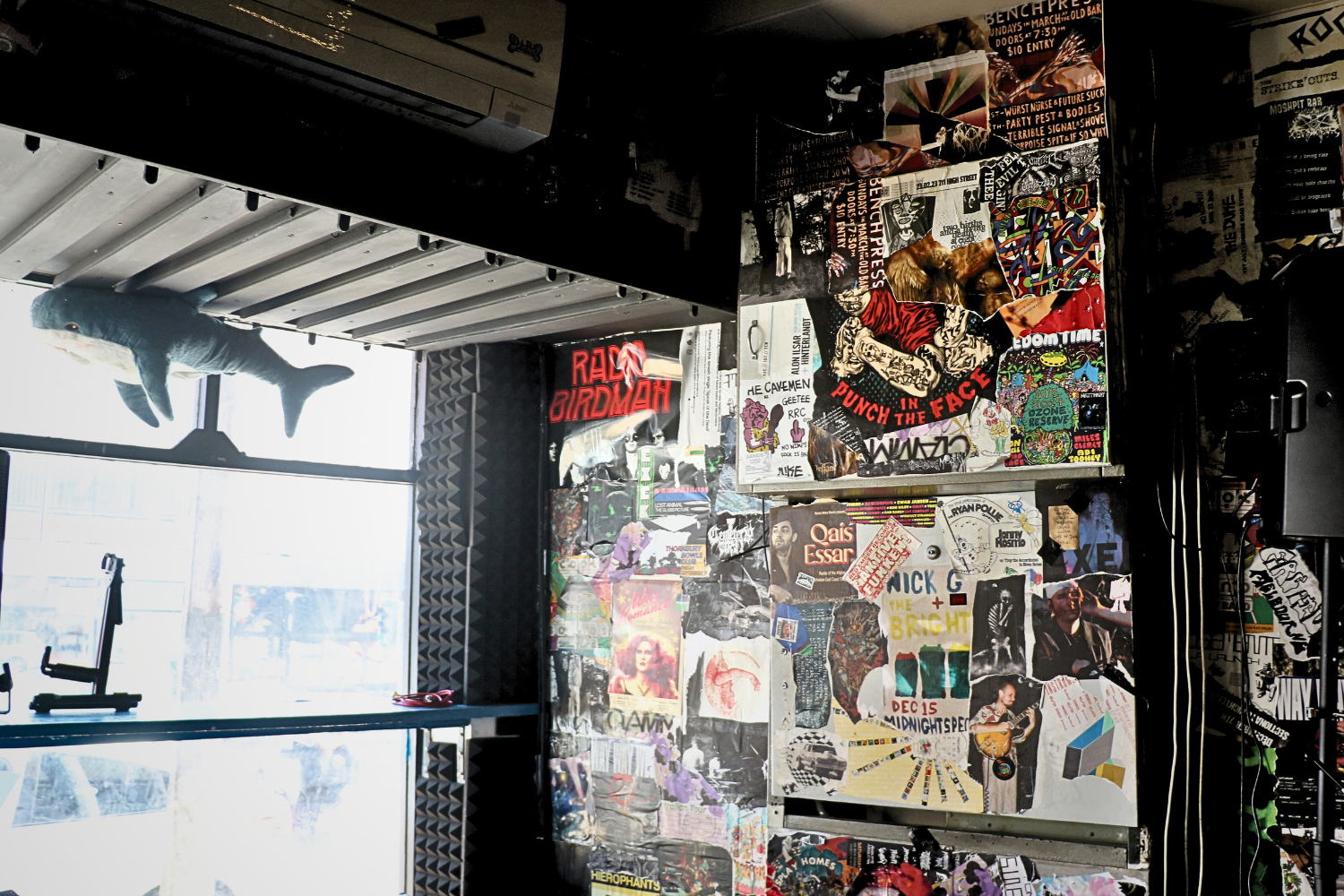
As painful as it is, as much as I love this room, and as much as it's gonna break my heart to take those posters down next week, I actually see it, potentially, as a good thing for Lazy Thinking, medium-long term; because it will force us to continue doing everything that we're doing, and it will force us to ensure that the next Lazy Thinking performance base and home base is more sustainable, in a way I think independent live music spaces need to be.
This is a hugely expensive property for us to maintain, and I've done a lot of thinking over the past few weeks since we were evicted, and we're determined to make sure that our next space is not as financially, um, risky as the existing one, so that we don't need to spend so much time fundraising just to keep the space open – all sorts of conversations with councils and different not-for-profit organisations about potential partnerships. That’ll be hugely beneficial.
I would love there to be multiple different locations for Lazy Thinking. I see a huge opportunity in Canberra for developing exactly what Lazy Thinking is doing in Sydney. There is an absolute lack of venues and opportunities for new and emerging artists in that part of the country.
I'm really determined to bring the record label, the residency program and the performance space closer together, so I would love us to have a larger base somewhere in Sydney that incorporates a studio, as well as the performance space in the same place, and potentially the venue as well. The education program is something that I'm really passionate about, and we've been working on that on and off for about nine months, so I would love our next space to be much more multi-purpose.
You do so much for so little material gain. What about your work satisfies you?
It is the most unambiguously worthwhile thing I have ever done in my life. It's always been very important to me that Lazy has never been about me; it's always been about the artists in the music community and my incredible staff, who do a fantastic job of keeping the different things we do operating literally every day. When we announced the closure of the venue, the response that the music community sent us, that was… that was shockingly beautiful.
I take satisfaction from… from knowing that we're doing what we set out to do. Every day that I come into the space, I’m greeted by people that I know that have come to hundreds of shows before, talking about how much they love playing here and how important lazy thinking is to them. I just- I take satisfaction from knowing that, as challenging as it is, we're providing something that I think is important.
We keep on talking about how… this is the most challenging time it has ever been for independent artists, and then concurrently how it’s been the most challenging time ever for small venues. I see those two issues as completely interrelated. They are part of the same crisis.
I take satisfaction from knowing that Lazy Thinking has tried to introduce a new approach and a new model that tries to solve those two problems. We try on the one hand to make a new approach to funding work that isn't just dependent on selling alcohol, and at the same time we are trying to support the independent music scene that has been having such a hard time – for such a long time – and I take satisfaction in knowing that there are clear, tangible benefits that we see every day, in people playing here and doing our residency. I find that deeply satisfying.
What can people do to help?
I don't want to make this about Lazy Thinking. Initially, the main thing that they can do is go to shows. When you go to shows, be aware of the ecosystem that you're a part of, so buy a ticket. If you can, support the venue if they have a donation-based subscription model. Help them out if you can afford it. Support the independent artists that are playing there. That is the most important thing that you can possibly do.
Just forget about Lazy Thinking's model for now. I also think that it would be really useful if the entire music community started thinking about the ways that this community model is going to be more a part of the ecosystem and our relationship to live music, so I would love people to start thinking more communally about their relationship to artists, music venues, and spaces where they go and support live music – less about attending a hospitality venue that is putting on live music.
We’re all recognising that there's this crisis going on, and live music venues and small venues in particular are disappearing. What I personally believe the outcome of that will be is that there will be more and more community-based spaces, whether they're DIY or, like Lazy Thinking, are offering a different community-funded model.
We say this a lot in our newsletters: I think people just need to be a bit more self-aware now when they go out and support live music. We need to start buying into the community-funded models that we're gonna start seeing popping up all over the shop.